
Webhook bridge with retry
One endpoint takes webhooks from anywhere, normalizes the payload and retries with exponential backoff.
Possibilities
Where this could go
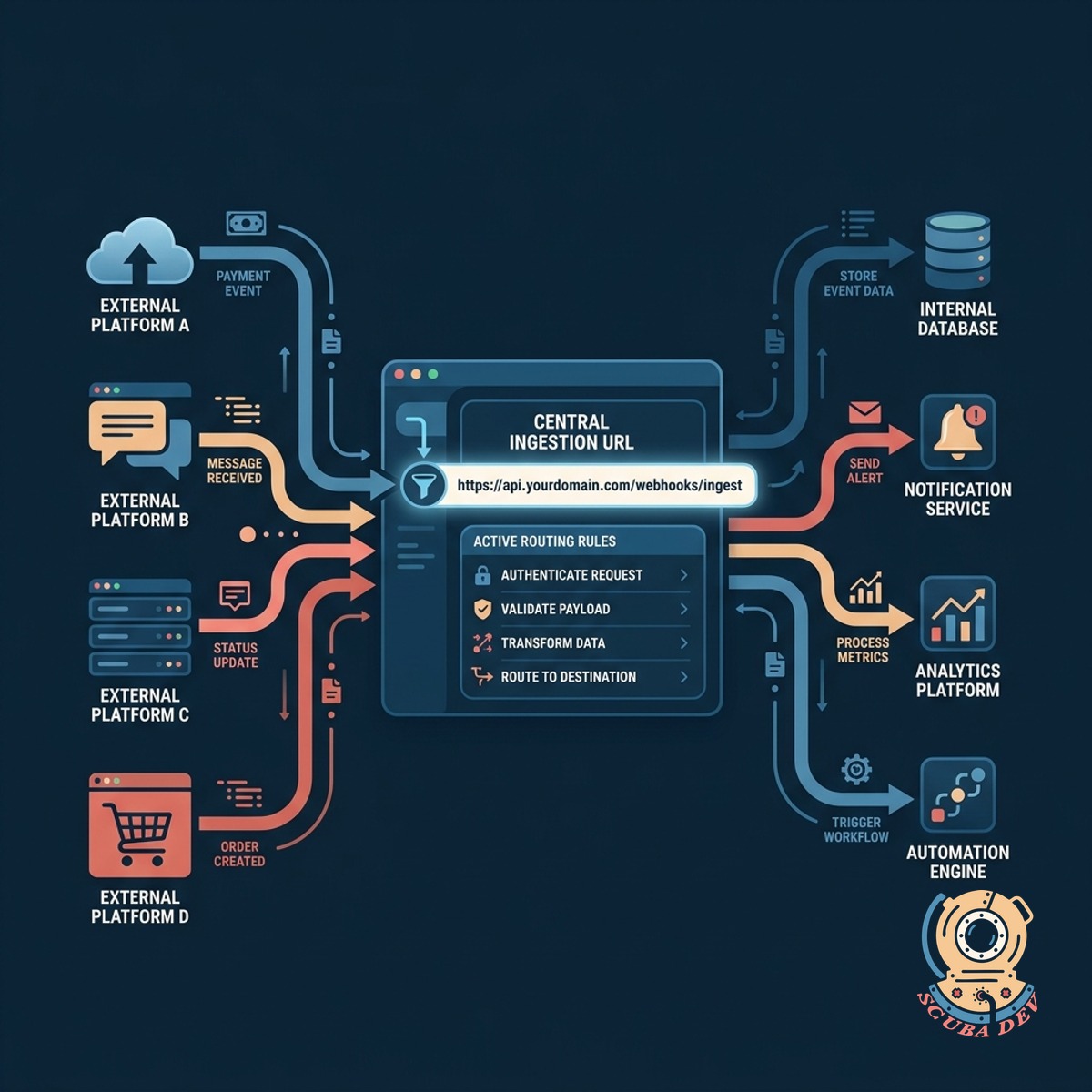
Single Endpoint For All Webhooks
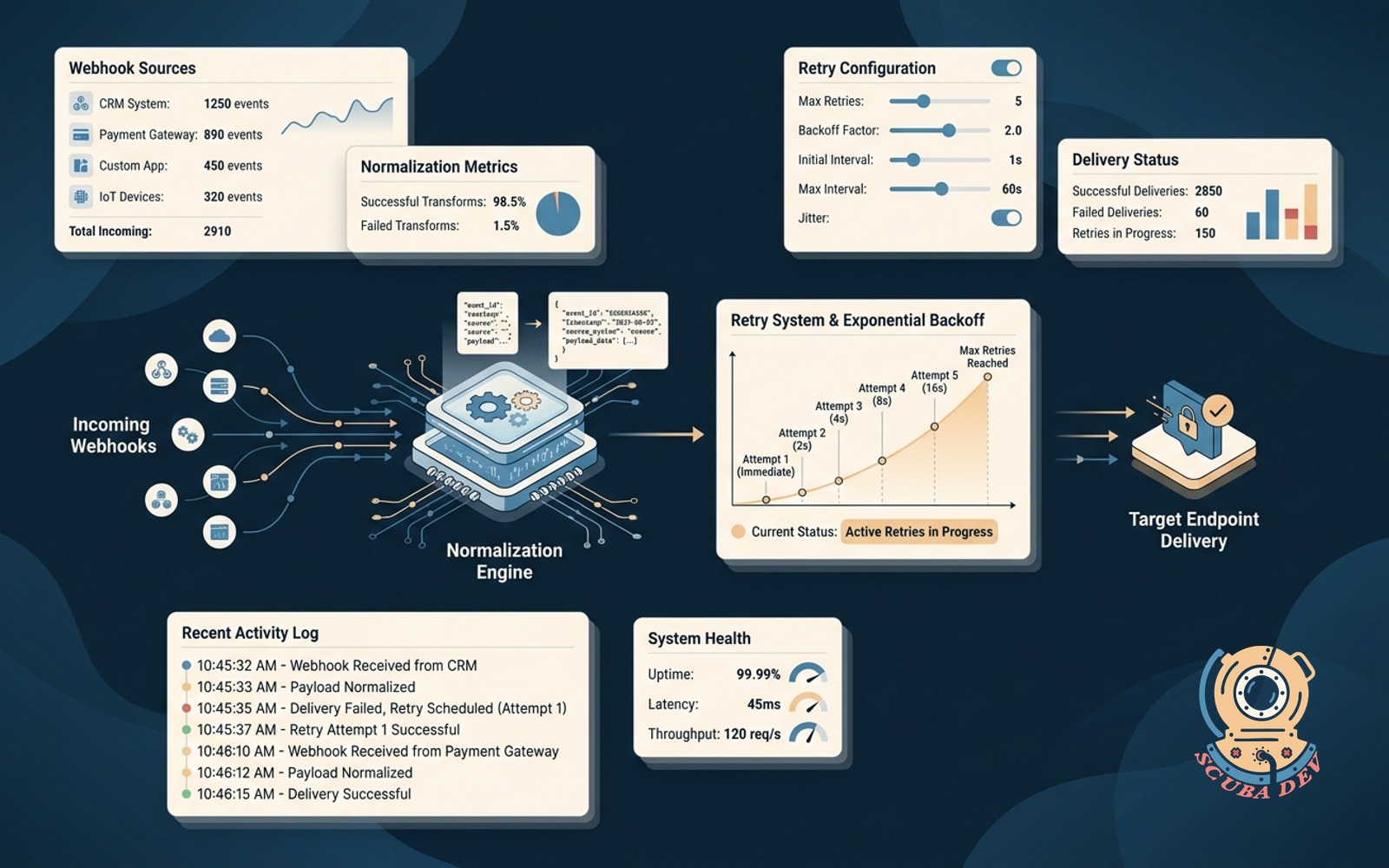
Route all incoming webhook traffic from any external platform through one centralized ingestion URL.
- Accept payloads from Stripe
- Receive Shopify order events
- Handle HubSpot CRM updates
- Process custom application webhooks
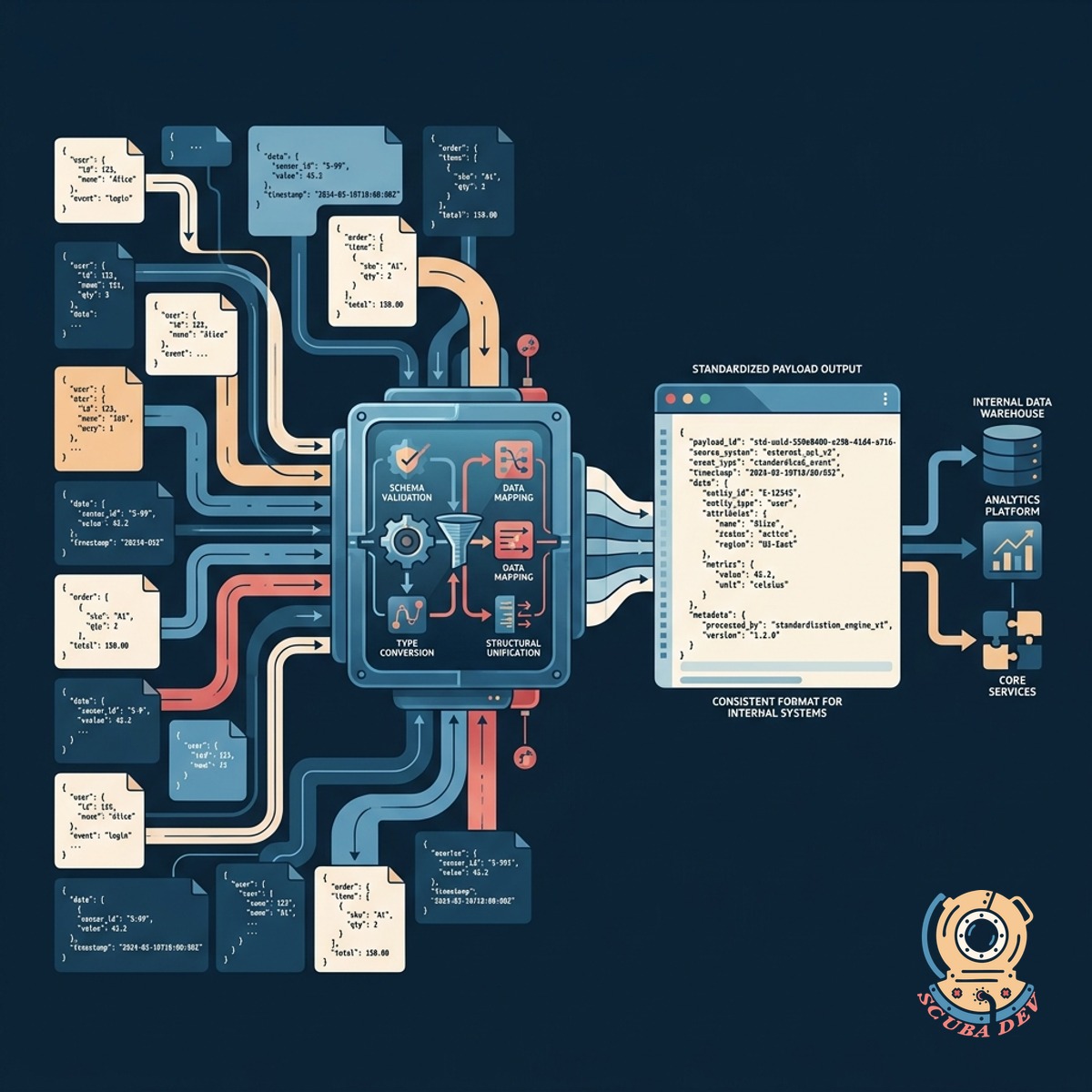
Standardize Complex Payload Structures
Transform diverse incoming JSON schemas into a consistent format before forwarding the data to your internal systems.
- Map disparate field names
- Flatten nested JSON objects
- Filter out unnecessary data
- Standardize timestamp formats
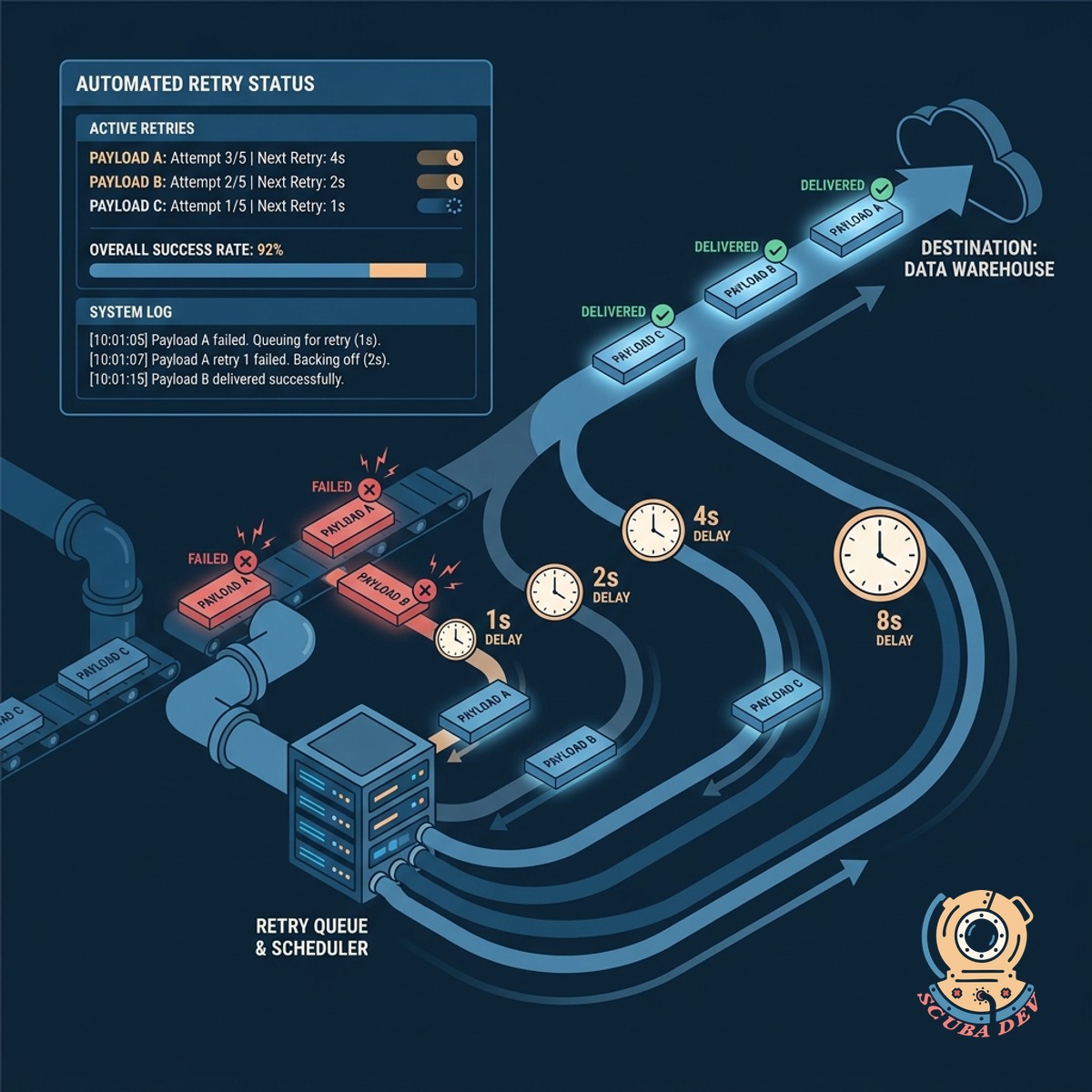
Automated Exponential Backoff Retries
Ensure reliable data delivery by automatically queuing and resending failed payloads with increasing time delays.
- Detect destination server outages
- Queue failed delivery attempts
- Scale retry intervals automatically
- Alert on permanent delivery failures
Questions
Things people ask
What happens if the destination server goes down?
The bridge detects the failed delivery and places the payload into a queue. It then attempts to resend the data using an exponential backoff strategy until the server accepts it.
Which platforms can send webhooks to this bridge?
Any platform capable of sending HTTP POST requests can connect to the bridge. This includes payment gateways like Stripe, ecommerce platforms like Shopify, and marketing tools like HubSpot.
How does the exponential backoff mechanism work?
If a delivery fails, the system waits a short time before retrying. If it fails again, the wait time increases exponentially. This prevents overwhelming a recovering server while ensuring the data eventually arrives.
Can the bridge modify the incoming data?
Yes. The normalization layer can map fields, change data types, and restructure the JSON payload so your internal application only has to process one consistent format.
How do we track failed webhook deliveries?
The system logs all incoming requests and their delivery status. You can view delivery logs, monitor the retry queue, and receive alerts if a payload exhausts its maximum retry attempts.
Does this replace tools like Zapier or Make?
This is a specialized infrastructure component focused entirely on reliable data ingestion and delivery. It is built for developers who need robust programmatic error handling rather than visual workflow automation.
Is the webhook bridge secure?
The endpoint validates incoming webhooks using signature verification to ensure the payloads originate from trusted sources before processing or storing any data.