
Churn risk dashboard with one-click save plays
Scores accounts weekly using product usage and billing signals. Ships save plays as emails or tasks with a click.
Possibilities
Where this could go
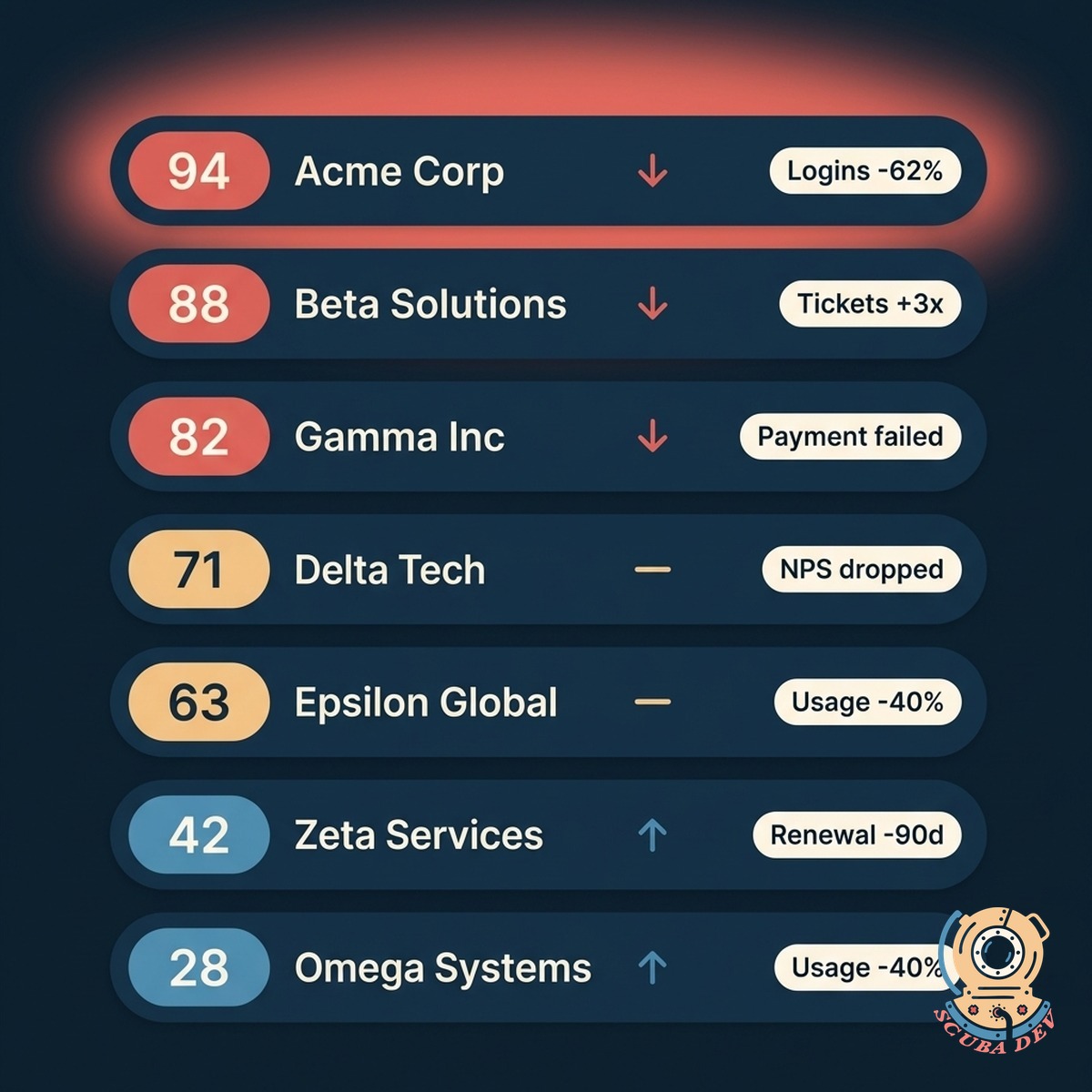
Weekly Risk Scores
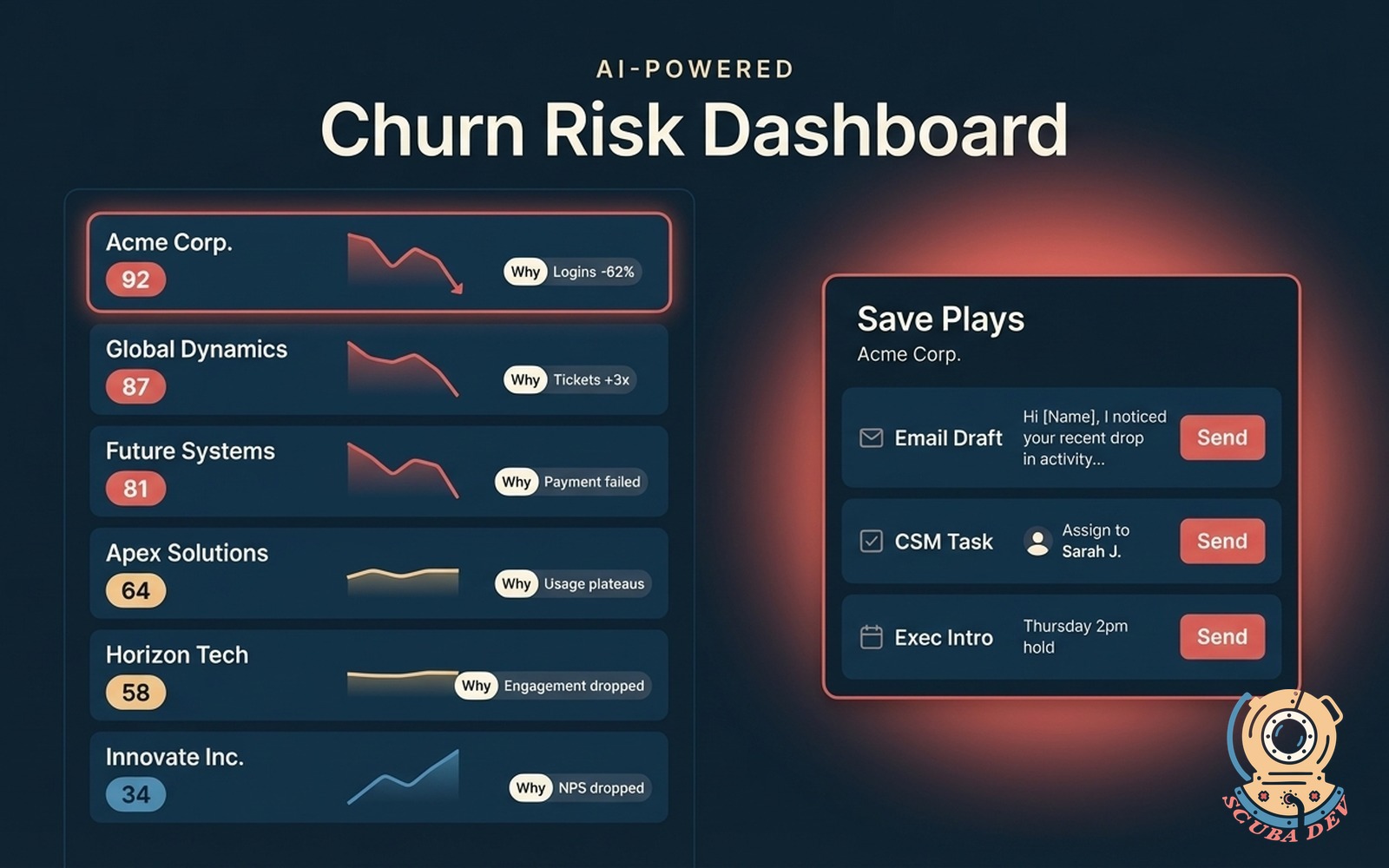
Every account scored 0 to 100 every week. Sorted so your CS team spends time where it matters most.
- Scores refresh overnight using the latest usage, billing, and support data
- Each account shows a why chip explaining the top signal driving the score
- Trend arrows show whether risk is rising, falling, or flat week over week
- Filter by segment, owner, or contract size to slice the list
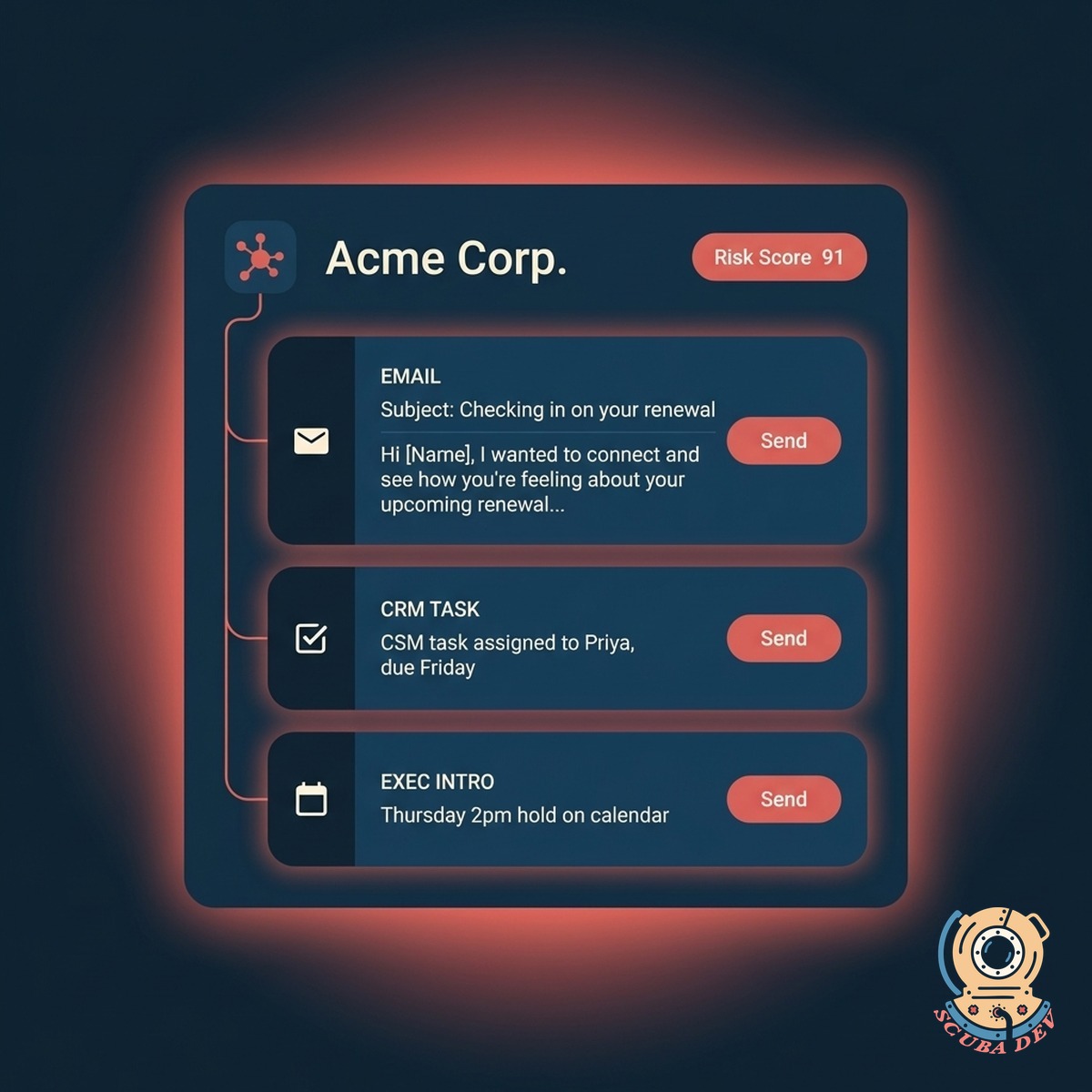
Save Plays Ready to Ship
Every at-risk account gets three save plays pre-drafted. Send with one click, or edit first. No blank-page staring.
- Email draft written in your brand voice with specifics from the account
- CRM task assigned to the right CS owner with context attached
- Exec intro request with a suggested time and talking points
- Tracks which plays ship, which get replies, and which accounts recover
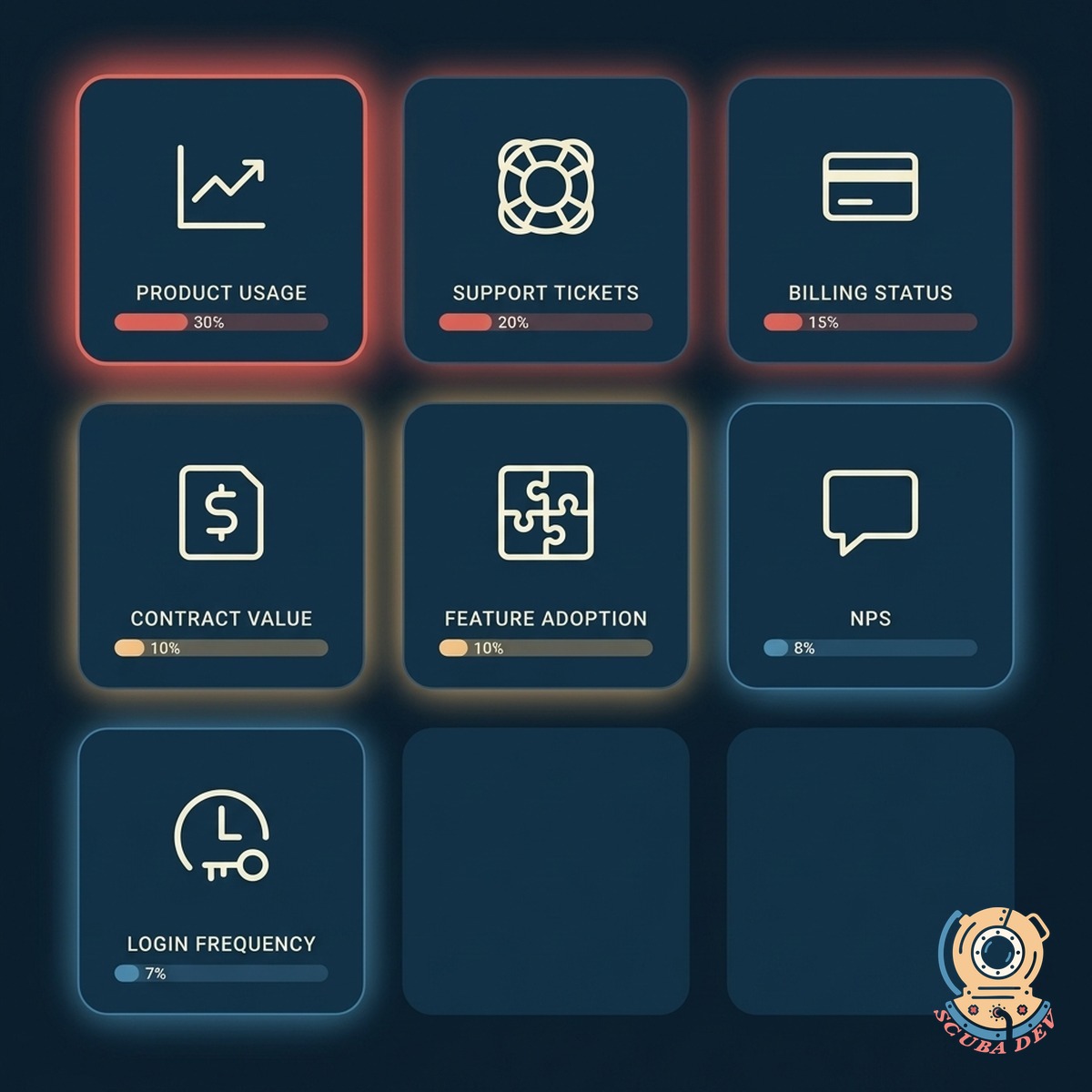
Every Signal Included
The score reads the data your team already trusts. Product usage, billing, support, and contract context, all weighted by your rules.
- Product usage from Mixpanel, Amplitude, Heap, PostHog, or custom events
- Billing status from Stripe, Chargebee, QuickBooks, or your ERP
- Support signal from Zendesk, Intercom, Help Scout, or Freshdesk
- Contract context including value, renewal date, and key stakeholders
- You set the weights during kickoff and adjust them anytime
Questions
Things people ask
What data does the score need?
Product usage, support tickets, billing status, and contract context. Most clients connect Mixpanel or Amplitude for product, Stripe or Chargebee for billing, Zendesk or Intercom for support, and Salesforce or HubSpot for contracts. We work with what you already have.
How is the score calculated?
Each signal has a weight you set during kickoff. The AI combines the weighted signals into a single score from 0 to 100. The why chip next to each score tells you which signal drove it so there is no black box.
Can we adjust the weights over time?
Yes. As you learn which signals actually predict churn for your product, you can dial them up or down. We review weights with you on a quarterly cadence and you can adjust anytime in between.
Where do the save plays come from?
We write the first versions with your team during onboarding. The AI drafts variants in your voice using the account specifics. You approve the templates, and the dashboard generates a tailored version for each at-risk account.
Can the plays fire automatically?
If you want. You can set auto-send rules for low-touch plays like a nudge email, and keep human-in-the-loop for high-touch plays like an exec intro. You control what runs on autopilot and what waits for review.
Does this integrate with our CRM?
Yes. Works with Salesforce, HubSpot, GoHighLevel, Pipedrive, and Zoho. Tasks, notes, and activity all log to the CRM automatically so your team sees the full picture without switching tools.
What if a low-score account still churns?
That is feedback. The dashboard logs every churn and compares it to the score. If a pattern keeps slipping past the score, we adjust the weights or add a new signal. The system gets sharper over time as you feed it outcomes.