




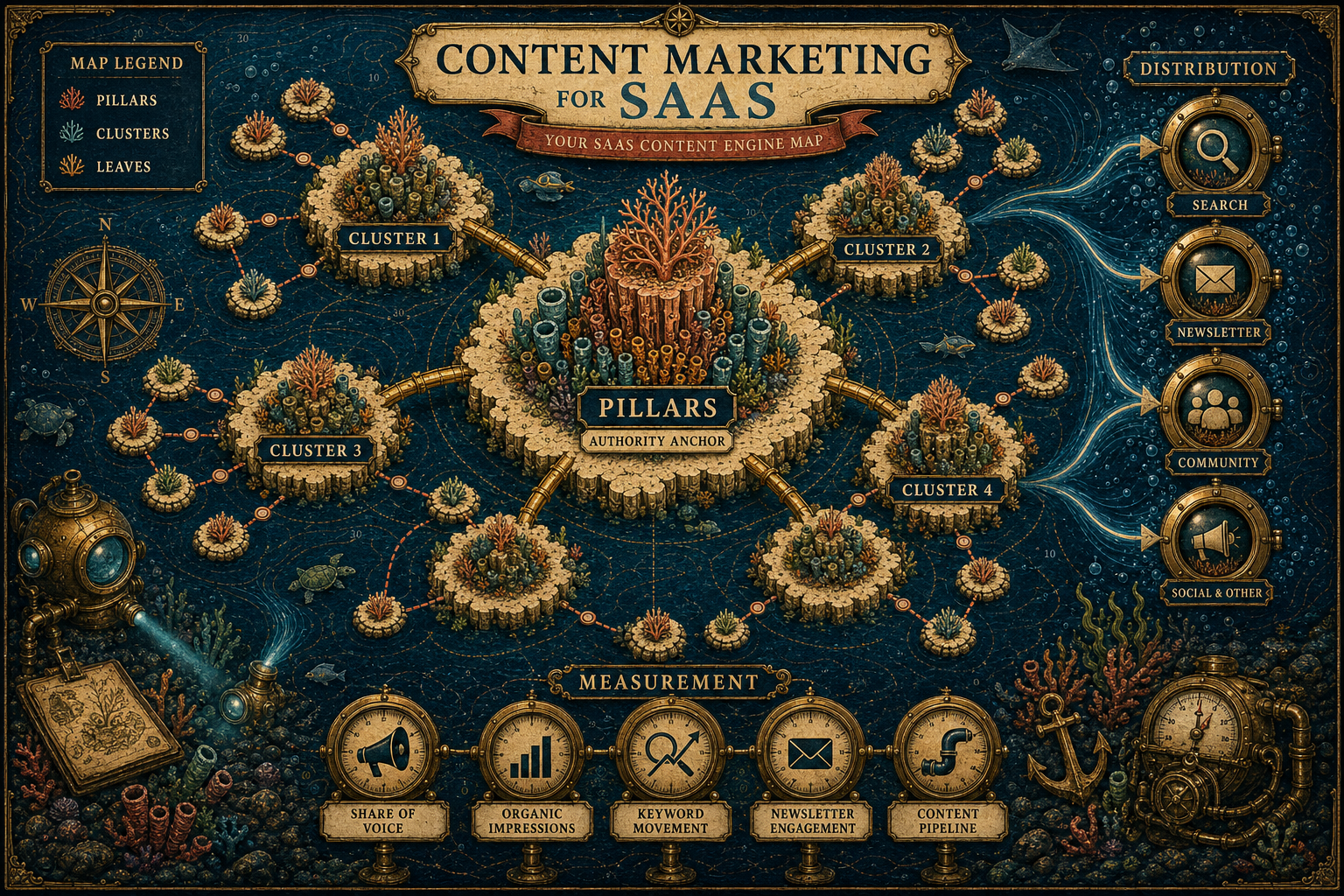
SaaS content in 2026 works when it is structured as a real engine: pillars, clusters, leaves, distribution, and measurement. The old volume-only playbook broke when search changed, LinkedIn became a relationship game, and cheap AI content made generic publishing invisible.
This field guide maps the engine we use: 5 pillars, 15 to 20 clusters, 60 plus leaves, 3 to 5 durable distribution surfaces, and six idea-library workflows that make the system operational.
If you are deciding where to start, jump to section five. The practical move is one pillar, two distribution surfaces, and leading indicators before traffic.
Below the surface
Most SaaS content marketing is still running the 2019 template: ten blog posts per month, a newsletter nobody opens, and a company LinkedIn account posting into the void. That approach stopped compounding once search results, social distribution, and AI-assisted publishing all changed at once.
The current framework is pillar, cluster, leaf, distribution, and measurement. It is not a calendar. It is a system for building topical authority, turning research into reusable assets, and measuring signal before traffic arrives.


By the numbers
The content engine is measured before traffic arrives
Pillars
5
A focused SaaS content map usually starts with 3 to 5 pillars.
Clusters
15-20
Clusters organize the subtopics under the authority anchors.
Leaves
60+
Leaf articles carry specific search and buyer intent.
Break-even
7 mo
The source draft cites B2B SaaS SEO break-even at roughly 7 months.






The 4 layers of a modern SaaS content engine
Start with topical ownership, then work down. Pillars anchor the market. Clusters organize intent. Leaves answer specific questions. Distribution gives every asset more than one path to discovery.
- 01
Pillars
Three to five authority anchors mapped to the jobs your product solves. Each pillar is comprehensive, opinionated, and refreshed quarterly.
- 02
Clusters
Three to eight articles under each pillar, tied together with internal links and a clear mid-funnel intent.
- 03
Leaves
Specific articles that answer one question fully. A leaf without a pillar and cluster above it is orphan content.
- 04
Distribution
Search, newsletter, LinkedIn, one community, and optionally video or podcast. Publishing without distribution is archiving.


03 / Common pattern
What the engine needs to work

Leading indicators
Measure share of voice, organic impressions, top-10 keyword movement, newsletter engagement, and content-attributed pipeline before judging traffic.
Durable distribution
Every leaf needs multiple surfaces: search, newsletter, LinkedIn, one buyer community, and optionally a video or podcast angle.
Human judgment
AI helps with research and editing, but the content that converts still needs stance, examples, proof, and a house voice.

-
01 / Content repurposer from one long video
Turns one webinar, podcast, or demo into a full distribution set: blog leaves, newsletter copy, LinkedIn posts, and community prompts.
PatternLong-form to multi-channelSurfaceBlog, newsletter, LinkedInOutputReusable distribution kit
This is the distribution multiplier. Long-form content already contains the examples, proof, and phrasing a SaaS team needs. The workflow extracts reusable angles without pretending the first draft is finished.
Read the full idea: Content repurposer from one long video →
-
02 / SEO position tracker with movement alerts
Tracks top-10 keyword movement so the team can see leading indicators before traffic catches up.
MetricTop-10 keyword movementUseMonthly leading indicatorSignalSearch momentum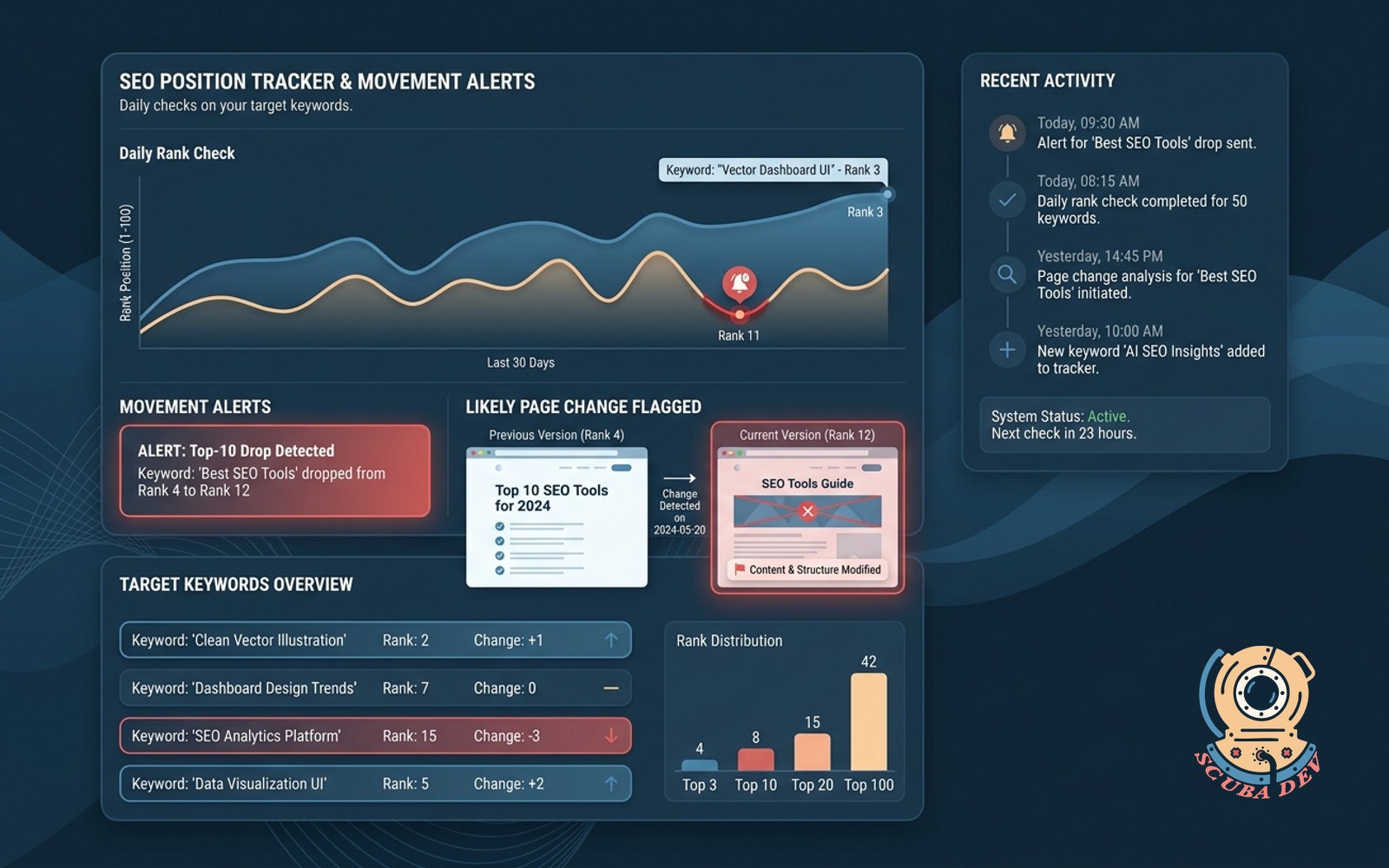
The content engine should be judged on signal before traffic. Rank movement, impressions, and share of voice tell you whether a pillar is waking up before pipeline attribution has enough time to show.
Read the full idea: SEO position tracker with movement alerts →
-
03 / Abandoned cart recovery with AI-written follow-ups
Uses buyer context to write recovery messages after high-intent visitors stall before conversion.
StageConversion follow-upSurfaceEmail or CRM automationIntentHigh-intent recovery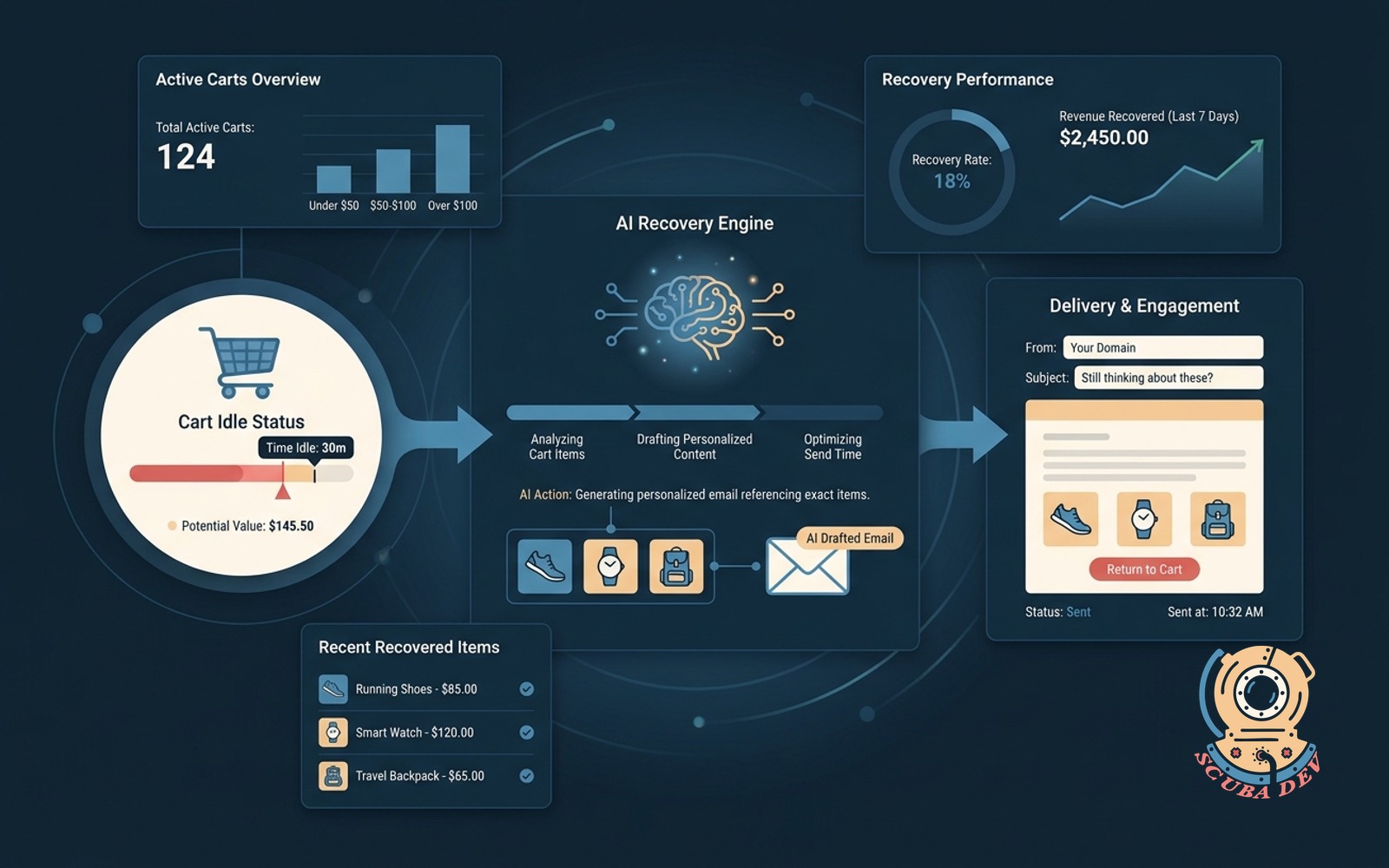
SaaS content is not only acquisition. The same research and message library should help recover high-intent visitors who leave mid-flow, especially after pricing, demo, or signup intent.
Read the full idea: Abandoned cart recovery with AI-written follow-ups →
-
04 / Reputation dashboard across every platform
Pulls customer language, review themes, and public sentiment into a source of proof-backed content ideas.
InputVoice of customerUseProof-backed contentFuelCustomer language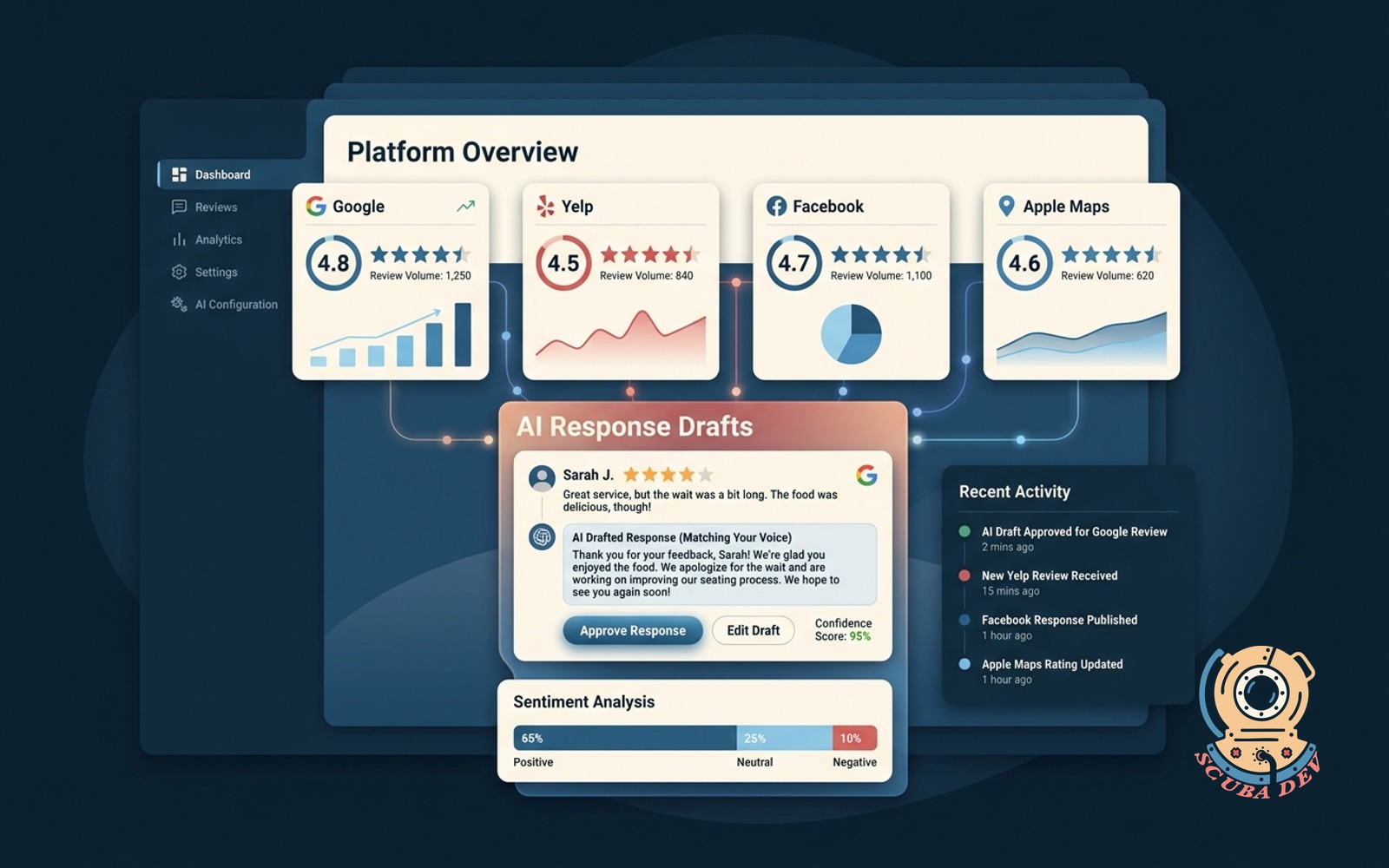
Opinionated content needs real customer language. A reputation dashboard gives the writer proof, objections, phrases, and examples that generic keyword research will not surface.
Read the full idea: Reputation dashboard across every platform →
-
05 / Publishing workflow with schedule
Turns approved content into a scheduled blog post, newsletter send, LinkedIn clip, and team alert.
Stackn8n publishing routeCadenceWeekly distributionRouteBlog, social, Slack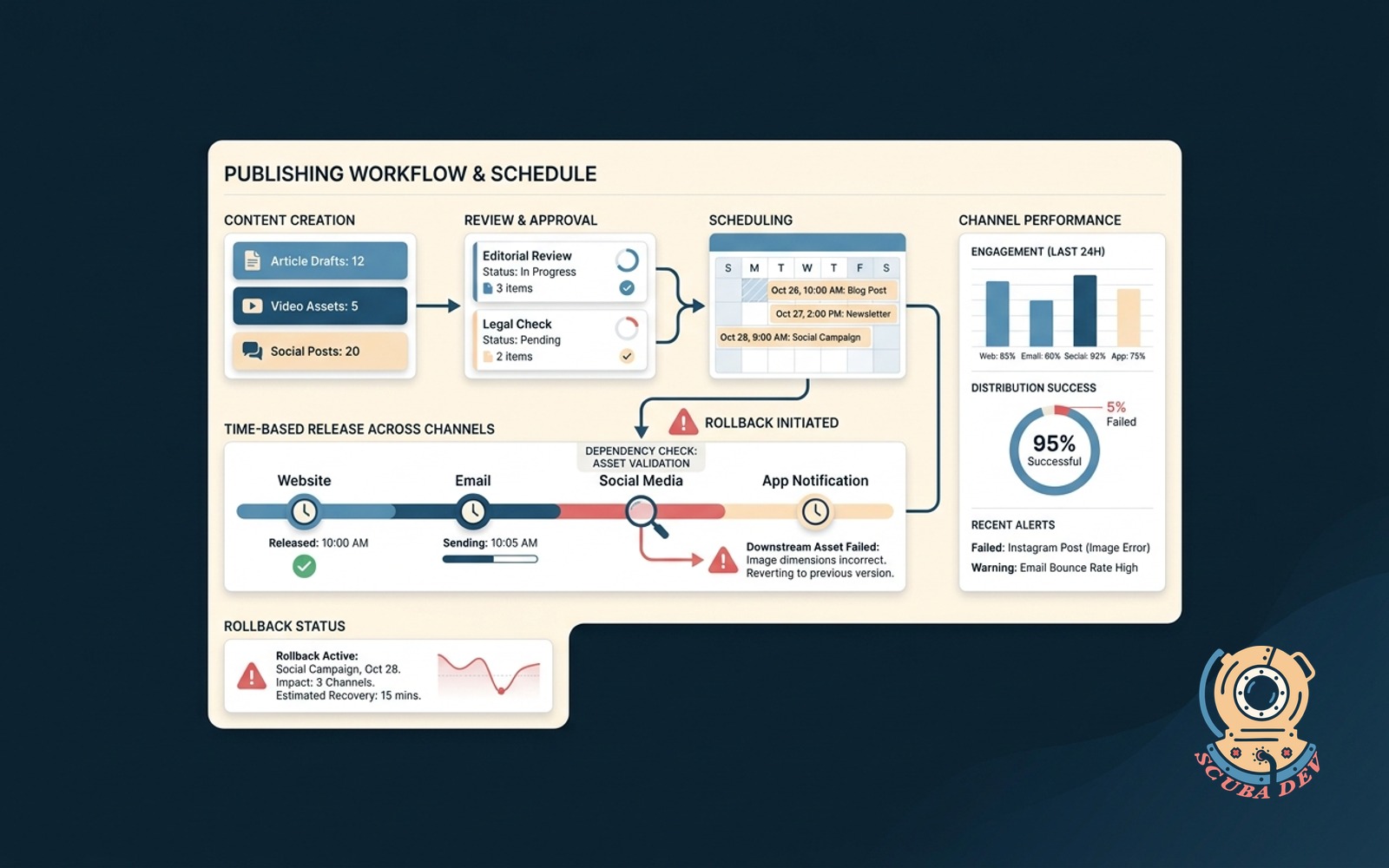
Publishing has to be operational. A workflow with schedule keeps the engine from depending on memory, handoffs, and manual republishing every week.
-
06 / UTM audit and cleanup tool
Keeps content-attributed pipeline honest by cleaning campaign tags before the reporting meeting.
MetricAttribution qualityOutputTrustworthy pipeline viewCleanupCampaign tags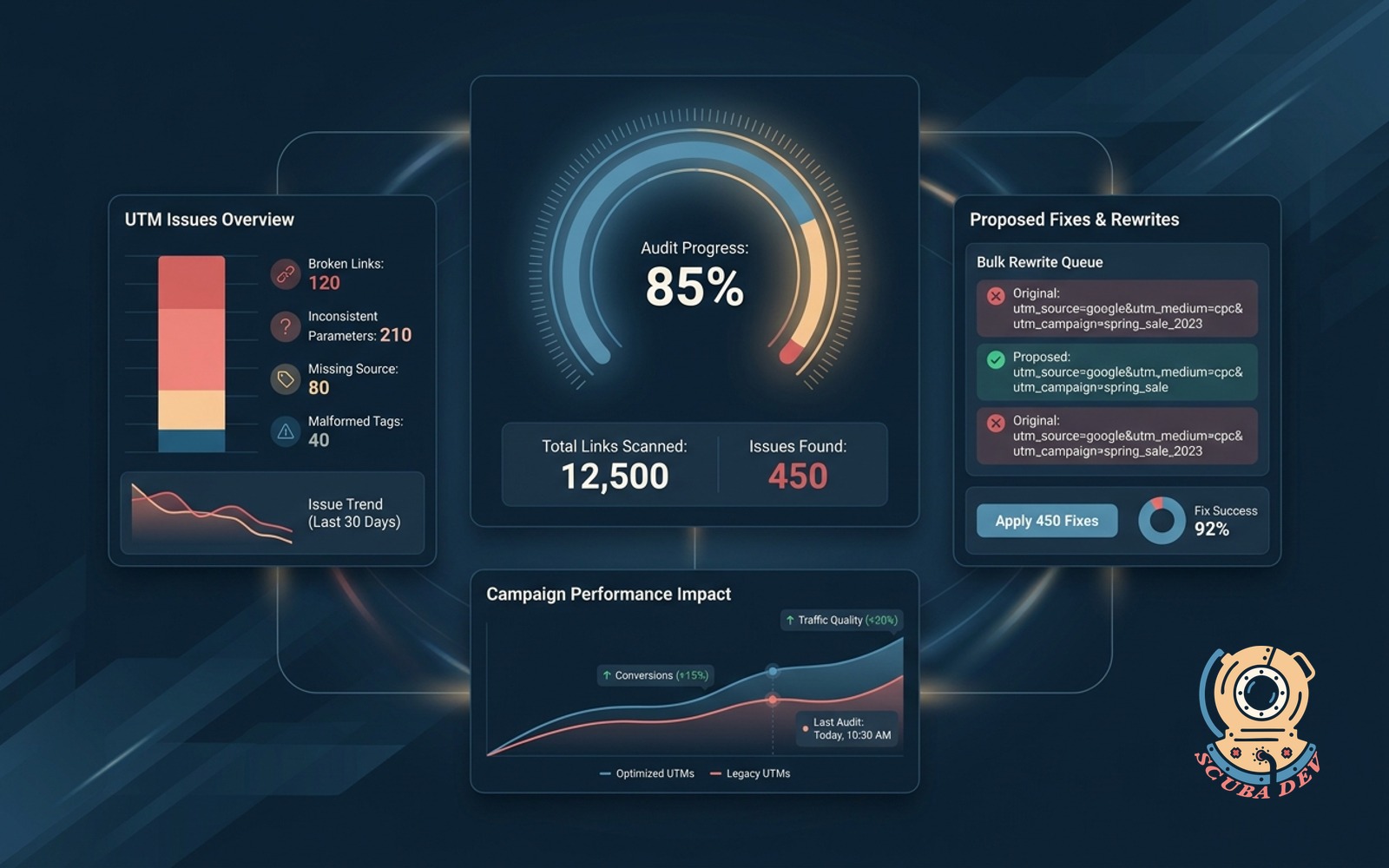
Content budgets survive when attribution is credible. UTM cleanup is not glamorous, but it is the difference between a content engine that gets funded and one that gets dismissed as fuzzy brand spend.



What to ship first
If you have one quarter, do not open five pillars. Build the first layer until it has enough coverage to produce signal.
- 01
Open one pillar
Pick the topic your product can credibly own. Ship the pillar, three clusters, and the first 20 leaves before opening the next map.
- 02
Commit to two surfaces
Organic search plus newsletter is the default. Add LinkedIn when a founder or operator can participate consistently.
- 03
Report signal before traffic
Use impressions, rank movement, share of voice, and engagement to decide whether the engine is waking up before revenue attribution arrives.
FAQ
How long before content starts working?
Leading indicators show movement at 4 to 8 weeks. Traffic and conversion show real lift at 6 to 9 months. Pipeline attribution follows at 9 to 12 months.
Can AI write the content?
Partially. AI is a research and editing assistant. AI-generated first drafts produce content that reads like AI content and does not build trust.
How does this change with AI Overviews?
Anchor deeper in the funnel. Comparison posts, data studies, and decision frameworks still drive traffic because AI summaries are thin on those.
Do we need a blog if we have LinkedIn?
Yes. LinkedIn is rented distribution. A blog is owned distribution. You need both, plus a newsletter.
How much should we publish?
Enough to cover your cluster strategy in 6 months. Typically 2 to 4 leaves per week plus one pillar per quarter.
Should we hire an agency?
If your team cannot commit a full-time writer plus a fractional SEO lead, yes. A good partner can run the engine while you build the team.